






SUMMARY

The intestinal and vaginal microbiota are closely linked and their balance influences both digestive comfort and intimate well-being.
Hormonal variations (periods, pregnancy, menopause) can weaken these flora and promote imbalances such as bloating, yeast infections, cystitis or vaginosis.
Probiotics are live micro-organisms that help rebalance these flora, by supporting good bacteria and limiting the proliferation of pathogens.
Lactobacilli play a key role for the intimate flora, because they maintain a protective acidic pH and help prevent certain vaginal and urinary infections.
Probiotics for intimate and intestinal flora
The vaginal and intestinal flora are made up of a set of bacteria and fungi that contribute to intimate and digestive well-being and balance. As these flora are linked, the balance of one reflects the general state of the other. However, periods of hormonal variation (periods, pregnancy, menopause) can disturb our flora, make them vulnerable and promote discomfort, both intimate and intestinal.
Taking probiotics helps rebalance our flora. Many studies already tend to prove the beneficial effect of probiotics on the intestinal flora. More recently, it has been shown that taking probiotics could improve intimate comfort.
In this article, we will look at the role of the intimate and intestinal microbiota as well as the importance of probiotics in maintaining their balance.

What is the microbiota?
The microbiota, or flora, refers to the communities of micro-organisms that colonize the human body. These are bacteria, viruses, parasites and non-pathogenic fungi hosted by the human body. There are several microbiota on the skin, in the mouth, in the vagina, in the lungs… The largest microbiota is that of the gut, which contains the most micro-organisms in terms of both number and species. The microbiota is involved in the proper functioning of the body. It plays a role in major essential functions such as nutrition, development, immunity and well-being.
The intestinal microbiota
Our digestive tract is home to no fewer than 1013 micro-organisms. This set of bacteria, viruses, parasites and non-pathogenic fungi makes up our intestinal microbiota (or gut flora). The intestinal microbiota ensures its own functioning by drawing on our food. It is unique to each individual. However, there is a common core of 15 to 20 species present in all human beings, in charge of the microbiota's essential functions. This flora forms from birth and develops gradually. It evolves with age, in response to changes in diet, medications taken or disease-causing pathogens. A change in lifestyle or fluctuations in sex hormones (testosterone and estrogen) can also lead to changes in the intestinal microbiota.
The gut flora has several essential roles in the proper functioning of our body, notably by promoting digestion, immunity and well-being. The intestinal microbiota makes it possible to synthesize essential compounds and vitamins and to break down complex molecules. It also has a protective function against foreign bacteria. It provides a physical and chemical barrier because the bacterial layer is difficult for foreign bodies to cross. Certain intestinal bacteria also produce molecules that kill invasive pathogenic bacteria. The intestinal microbiota therefore acts as a protective barrier against ingested pathogens.
The vaginal microbiota
In 1892, Döderlein published the first in-depth study of the human vaginal microbiota. The vaginal microbiota, also called intimate flora or Döderlein flora, is made up of 90% lactic bacteria ( lactobacilli) that colonize the vagina throughout a woman's life. Many other species are also present in the vaginal microbiota, such as viruses, fungi, yeasts… After puberty, the vaginal microbiota is mainly made up of four species of lactobacilli but there are many variations between populations. Lactobacilli are a commensal bacterial genus of the digestive tract and the genital tract. The species present in the genital area are mainly L. crispatus, L. gasseri, L. iners and L. jensenii.
The vaginal microbiota changes over time and with sex hormones throughout a woman's life. It is not present from birth, and requires the presence of estrogen to become established. During puberty and throughout the reproductive period, the microbiota changes radically. During menstruation, the environment can be more favorable to the proliferation of certain bacteria in the vaginal cavity. This change in the vaginal microbiota depends on each woman and can be more or less marked. At menopause, the estrogen level falls, so the environment becomes less favorable to the development of lactobacilli.
The bacterial flora forms a protective biofilm on the vaginal mucosa, which prevents the proliferation of pathogenic germs by inhibiting their growth, adhesion and development. It protects the deep genital organs by creating a hostile environment for most other bacteria.
The link between intestinal and intimate flora
The vaginal microbiota inherits a number of bacteria from the intestinal microbiota because of the anatomical proximity of the colon and the urogenital tract. There are therefore great similarities between these two flora. Exchanges are constant, by internal route, through contact between organs, or by external route via the biofilm formed by bacteria on the perineum, between the anus and the vulva, or because of inappropriate gestures.
Thus, bacteria migrate from one to the other, for better, protection, as for worse: cystitis, vulvitis, papillomavirus, yeast infections… and the associated discomfort, pain, discharge and odors.
For example, the bacterium Candida albicans, involved in candida infections, is present in the intestinal and vaginal microbiota. Likewise, in the case of urinary infections or cystitis, it is most often found that a germ from the intestinal microbiota manages to colonize the urinary tract by the ascending route, which causes the infection.
That is why it is important not only to restore balance in the vaginal microbiota, but also in the intestinal microbiota, because the two are closely linked.

Dysbiosis
The bacterial balance can be altered and have an impact on well-being. An alteration of the microbiota is called dysbiosis. In the case of the intestinal microbiota, dysbiosis can be caused by stress, an unbalanced diet or other factors that can lead to disturbed bowel transit, bloating or digestive discomfort.
Regarding the vaginal microbiota, its alteration can be caused by the presence of a multitude of anaerobic bacteria during a dysbiosis, vaginosis. It is defined by an imbalance in the vaginal flora, leading to a decrease in useful and protective micro-organisms and an increase in more harmful micro-organisms. The symptoms of vaginosis can vary from one woman to another, but may include unusual vaginal discharge (white, gray or yellowish) with an unpleasant odor as well as vaginal itching and burning.
Predisposing factors such as periods, pregnancy, sexual practice, uncontrolled use of antibiotics and vaginal pain can alter the microbial community. An alteration of the intimate flora is associated with various conditions such as an increased risk of sexually transmitted infections and urinary infections. According to a study on the roles of the vagina and the vaginal microbiota in urinary tract infection, the vagina can harbor uropathogenic bacteria such as Escherichia coli, the most common cause of urinary tract infection. Vaginosis also increases the risk of developing cancer, notably cervical cancer. Finally, it is associated with a greater risk of gynecological and obstetric complications.
The vaginal microbiota therefore plays an important role in a woman's sexual health, but also in reproduction and the risk of developing cancers. The major role of bacterial vaginosis in the conditions associated with it clearly shows that it is essential to fight effectively against this dysbiosis.
How to take care of your microbiota?
In order to restore a healthy intestinal and intimate flora, there are different solutions:
- The use of plants: Licorice and lady's mantle help reduce vaginal or intestinal yeast infections.
- Following lifestyle rules: The WHO (World Health Organization) recommends avoiding vaginal douching, overly harsh intimate hygiene products and wearing synthetic or too tight underwear.
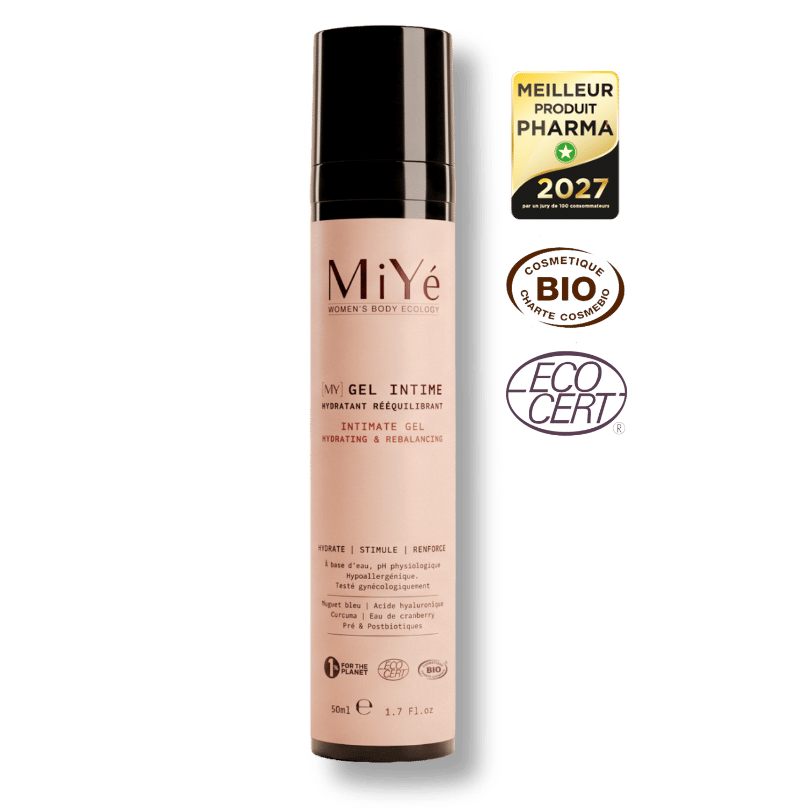
- Supporting the intimate area from the outside: a suitable moisturizing care, without harsh products, completes the routine. Our intimate moisturizing balancing gel combines hyaluronic acid, blue lily of the valley and pre and postbiotics to soothe and moisturize the intimate area.
- Taking probiotics: These are live micro-organisms that can temporarily colonize our microbiota.

Probiotics: what are they?
Probiotics are live micro-organisms that have a positive effect on the health of the host when administered in sufficient quantity. Probiotics can be bacteria (bifidobacteria, lactobacilli, etc.) and yeasts (saccharomyces). They play a preventive and curative role by colonizing the gut and the vagina, which will change the balance of the flora. The environment is then acidified, which could help relieve various intestinal and vaginal disorders. To be effective, probiotics must be administered alive, be able to withstand the acidity of the stomach and the vagina and be able to adhere to their walls. These properties depend on the strain used, the nature of the foods that contain them and, above all, the dose ingested. To be beneficial, probiotics should be taken several times a week. Indeed, they only colonize the flora temporarily.
The recommended daily intake of probiotics is 109 to 1010 bacteria per day so as to have, in general, 108 to 109 live bacteria reaching the gut and able to exert their effects. The intake of probiotics must be regular, because studies have shown that they disappear from the tract one to two weeks after the administration stops. Probiotics can be provided through food, notably with foods traditionally rich in probiotics (fermented dairy products and certain cured meats). However, the quantity of probiotics naturally present in food is highly variable and often low. Today, there are products enriched with probiotics such as yogurts, fermented milk and cheeses as well as food supplements. The latter provide a reliable, controlled and substantial source of essential probiotics.
The main strains recognized as probiotics in humans are bacteria belonging to the genera Lactobacillus, Bifidobacterium, Enterococcus, Streptococcus and yeasts of the genus Saccharomyces. These species are widely used in fermented food products, non-fermented food products, as well as in food supplements. At the urogenital level, the probiotic action most often relies on the antimicrobial capacities of lactobacilli.
The value of lactobacilli
Lactobacilli are beneficial bacteria found in various parts of the body, including the digestive tract and the vagina. They play a role in lactic fermentation, during the process of converting sugars into lactic acid. This ability to metabolize sugars is a characteristic trait of lactobacilli. By producing lactic acid, they lower the pH of their environment, which creates an acidic environment that inhibits the growth of many pathogenic bacteria.
Lactobacilli generally predominate in the normal vaginal flora and play an essential role in maintaining vaginal health. According to a study on the role played by lactobacilli in controlling the population of vaginal pathogens, lactobacilli are of considerable interest. These organisms contribute to the control of the vaginal microbiota through two mechanisms:
- Adhesion to mucus: They form a barrier that prevents colonization by pathogens.
- Production of antimicrobial compounds: Lactic acid, hydrogen peroxide …
Lactobacilli therefore help maintain an acidic pH, preventing the proliferation of pathogens and the development of vaginal infections. Thus, lactobacilli have a strong antimicrobial activity which can present these strains as probiotic candidates.
In the 1930s, Mohler and Brown were the first to propose a treatment of vaginitis and vaginosis with a culture of Döderlein bacilli. Since then, various studies have shown the effectiveness of applying strains of lactobacilli at the vaginal level to fight urinary infections and bacterial vaginosis:
- Bruce et al. in 1992 administered one capsule containing lactobacilli per week for one year to ten patients suffering from recurrent urinary infections. Following this treatment, half of these women no longer reported recurrences.
- Hallen et al. in 1992 treated 28 women with bacterial vaginosis with capsules containing a strain of lactobacillus acidophilus, twice a day for six days. Following this treatment, more than 50% of the treated women had their vaginal samples normalized with the elimination of the bacterium causing vaginosis whereas this was not the case for any of the women in the placebo group.
- In 2020, a study on the roles of the vagina and the vaginal microbiota in urinary tract infection showed that women with bacterial vaginosis have a higher risk of urinary infection than women with a vaginal microbiota dominated by lactobacilli. Clinical trials suggest that vaginal interventions that affect the microbiota (vaginal probiotics and estrogen treatments) may protect against further episodes of recurrent urinary infection.

Probiotics for the intimate flora
The use of probiotics has been studied to space out or even avoid recurrences of bacterial vaginosis. Several strains are of interest with the aim of limiting intimate infections by inhibiting the growth of pathogens and rebuilding a healthy intimate flora.
The Italian company Roelmi, a probiotics specialist, has developed a patented SynBalance® blend of several lactobacilli and a bifidobacterium: Lactobacillus rhamnosus LRH020, Lactobacillus plantarum PBS067, Bifidobacterium animalis lactis BL050.
- Lactobacillus rhamnosus LRH020: This strain has a strong ability to fight pathogens, notably Candida albicans, a yeast that can be responsible for candidiasis during a hormonal imbalance. L. rhamnosus helps restore a good balance of the vaginal flora.
- Lactobacillus plantarum PBS067: This strain contributes to the breakdown of dietary fiber, thus promoting healthy digestion. This strain is therefore particularly effective in reducing digestive disorders such as bloating and abdominal pain. It also contributes to the balance of the intimate flora because its presence in the vaginal tract has been demonstrated and is linked to a decreased risk of bacterial vaginosis.
- Bifidobacterium animalis lactis BL050: This bifidobacterium is recognized for its potential to support intestinal health. It promotes the growth of good bacteria in the gut, which can help improve digestion, strengthen the intestinal barrier and reduce gastrointestinal problems such as bloating and constipation.
This probiotic complex can be combined with a strain of Lactobacillus acidophilus PBS066, dominant in the vaginal ecosystem. It helps maintain an acidic pH in the intimate area by producing lactic acid. Studies show that this strain helps prevent and treat bacterial vaginosis.
Several clinical studies have been carried out by the company Roelmi to highlight the action of these probiotics on the intimate flora:
- A randomized controlled study including 20 women without urinary infection looked at the intake of this probiotic blend on vaginal colonization, in order to avoid urogenital infections and promote a good balance of the vaginal flora. Significant vaginal colonization by the administered strains and a decrease in symptoms (itching, burning, discharge…) were observed.
- A prospective study highlighted the improvement of bacterial vaginosis using the SynBalance® Femme complex. 75 women with bacterial vaginosis (BV) were treated with local metronidazole and then 50 of them started a supplementation program with SynBalance® Femme. The remaining 25 women made up the control group and received the same gynecological follow-up as the active group. A reduction in the recurrence rate of bacterial vaginosis was observed for the supplemented women. In the long term, a recovery of lactobacilli was also observed, with a resolution of symptoms.
- In 2023, a randomized clinical study on 50 postmenopausal women aged 45 to 60 was carried out. They took part in a treatment with lactobacilli for 4 weeks. The evolution of the vaginal microbiota was assessed by vaginal swabs while taking the product. Positive colonization and the promotion of good bacteria were observed. An activation of the immune response and an increase in antioxidant potential were noted.
These strains have the ability to colonize the vaginal epithelium even when introduced orally. This probiotic complex therefore acts as prevention and as a complementary treatment for intimate infections and disorders in women.
Key takeaways
To sum up, the vaginal and intestinal flora are the result of a natural balance of different bacteria that coexist harmoniously. It is necessary to take care to preserve this balance by maintaining a healthy lifestyle. However, an imbalance can occur and this is where probiotics come in. These live micro-organisms will help rebalance the flora. Many studies already tend to prove the beneficial effect of vaginal probiotics in the treatment of bacterial vaginosis and in the prevention of its recurrences.
Thus, because of their generally recognized as safe status, lactobacilli are widely used as one of the alternatives, in addition to conventional antimicrobial treatment, against vaginal pathogens for the prevention of chronic vaginitis and the restoration of the vaginal ecosystem.
Taking care of your flora, from the inside and the outside. To support the balance of the intimate and intestinal flora, you can discover [MY] Essential Intimate and Intestinal Flora, a food supplement that combines prebiotics, probiotics, postbiotics and cranberry. For the outside, the intimate moisturizing balancing gel completes the routine. The [MY] Intimate Comfort Pack brings the two together.
Food supplement. Does not replace a varied and balanced diet and a healthy lifestyle. Consult your healthcare professional before any supplementation. In case of persistent or painful symptoms, consult your doctor or gynecologist.
FAQ
What is the link between the intimate flora and the intestinal flora?
These two flora are anatomically close and constantly exchange bacteria, both internally and externally. The balance of one therefore influences that of the other, hence the value of taking care of both.
What are lactobacilli used for in the intimate flora?
Lactobacilli make up about 90% of the bacteria in the vaginal flora. By producing lactic acid, they maintain an acidic pH and form a barrier that limits the settling of unwanted germs.
What are probiotics?
Probiotics are live micro-organisms that, when administered in sufficient quantity, have a beneficial effect on health (FAO/WHO definition). They only settle temporarily: regular intake is therefore recommended.
How can you preserve your intimate flora day to day?
Avoid vaginal douching, overly harsh hygiene products and synthetic or too tight underwear. A balanced diet, probiotics and a suitable moisturizing care can complete this routine. In case of persistent discomfort, talk to your doctor or gynecologist.
Sources
- Microbiote intestinal (flore intestinale), Inserm.
- Probiotics in food: health and nutritional properties and guidelines for evaluation, FAO/WHO, 2006.
- The International Scientific Association for Probiotics and Prebiotics consensus statement on the scope and appropriate use of the term probiotic, Nature Reviews Gastroenterology & Hepatology, 2014.
- Roles of the vagina and the vaginal microbiota in urinary tract infection: evidence from clinical correlations and experimental models, GMS Infectious Diseases, 2020.
- Efficacy of vaginal probiotic capsules for recurrent bacterial vaginosis: a double-blind, randomized, placebo-controlled study, American Journal of Obstetrics and Gynecology, 2010.
- Probiotics for the treatment of bacterial vaginosis, Cochrane Database of Systematic Reviews.
- Evaluation of Antimicrobial, Antiadhesive and Co-Aggregation Activity of a Multi-Strain Probiotic Composition against Different Urogenital Pathogens, International Journal of Molecular Sciences, 2023.
- Efficacy of Lactiplantibacillus plantarum PBS067, Bifidobacterium animalis subsp. lactis BL050, and Lacticaseibacillus rhamnosus LRH020 in the Amelioration of Vaginal Microbiota in Post-Menopausal Women, Nutrients, 2024.
- Preliminary study on the prevention of recurrent urinary tract infection in adult women using intravaginal lactobacilli, International Urogynecology Journal, 1992.
- Treatment of bacterial vaginosis with lactobacilli, Sexually Transmitted Diseases, 1992.

Share:
How can you reconnect with yourself and with others?
What are the different experiences with endometriosis?