





SUMMARY


The body is home to several microbiomes (gut, vaginal, skin, etc.) that interact with one another, and the gut microbiome often plays a central role in this overall balance.
The gut flora directly influences the intimate flora, as certain bacteria from the gut microbiome can colonize the vaginal area because of their anatomical proximity.
A gut imbalance can therefore promote intimate issues, such as vaginal infections or urinary discomfort, by disrupting the balance of the vaginal microbiome.
Supporting the gut microbiome (balanced diet, probiotics, healthy lifestyle) can help preserve the balance of the intimate flora and improve digestive and gynecological comfort.

What is the vaginal microbiome?
A microbiome, in general, is a set of bacteria, good and bad, transient and permanent, that live together and work in synergy with one another. They are often accompanied by fungi and other organisms. What matters, as in any ecosystem, is the balance between these different populations.
All our microbiomes are made up of the same major families of bacteria. But their proportions and quantities vary greatly. The richest in both quantity and variety is the gut microbiome. It is often said to act as a reservoir for the other microbiomes.
The bacteria in our microbiomes play a protective role. Take the vaginal flora: the bacteria that make it up produce lactic acid. This substance lowers the pH of the vagina, making the area acidic and therefore hostile to outside bacteria, viruses and parasites.
They also protect us by forming biofilms that prevent external organisms from entering the body or adhering to our mucous membranes.
What makes the vaginal microbiome special is that it depends heavily on hormone levels, especially estrogen levels. Estrogen thickens the vaginal lining and stimulates the production of glycogen. This attracts lactobacilli, the most numerous bacteria in the vagina, and so contributes to its health and protection.
The vaginal microbiome also evolves throughout life (childhood, puberty, pregnancy, menopause) and according to the phases of the cycle. During periods, for example, the bacteria produce less lactic acid and the pH rises, making the environment less protective.
And a less protective microbiome can allow infections and fungi to develop. This is what happens with yeast infections, vulvitis, vaginitis or cystitis, for example.
What is the link between the vaginal microbiome and the gut microbiome?
The most obvious link, even if indirect, is created at birth: in a vaginal delivery, the mother passes her vaginal microbiome on to her baby. These bacteria form the basis for the formation and development of the baby’s gut microbiome.
The vaginal flora, like the gut flora, is therefore unique to each woman. It depends on her birth, her age, her environment and place of life, her habits and hygiene, her contraception, etc.
Then, links are established between the gut microbiome and the vaginal microbiome because of the anatomical proximity of the colon, in particular its terminal part, the rectum, and the urogenital tract. This is why these two microbiomes show great similarities: exchanges are constant, whether internally, through contact between organs, or externally, through the biofilm formed by bacteria on the perineum, between the anus and the vulva, or through inappropriate gestures (see below).
So bacteria migrate from one to the other, for better, meaning protection, or for worse: cystitis, vulvitis, papillomavirus, yeast infections, etc., and the discomfort, irritation, pain, discharge, odors, etc. that go with them.
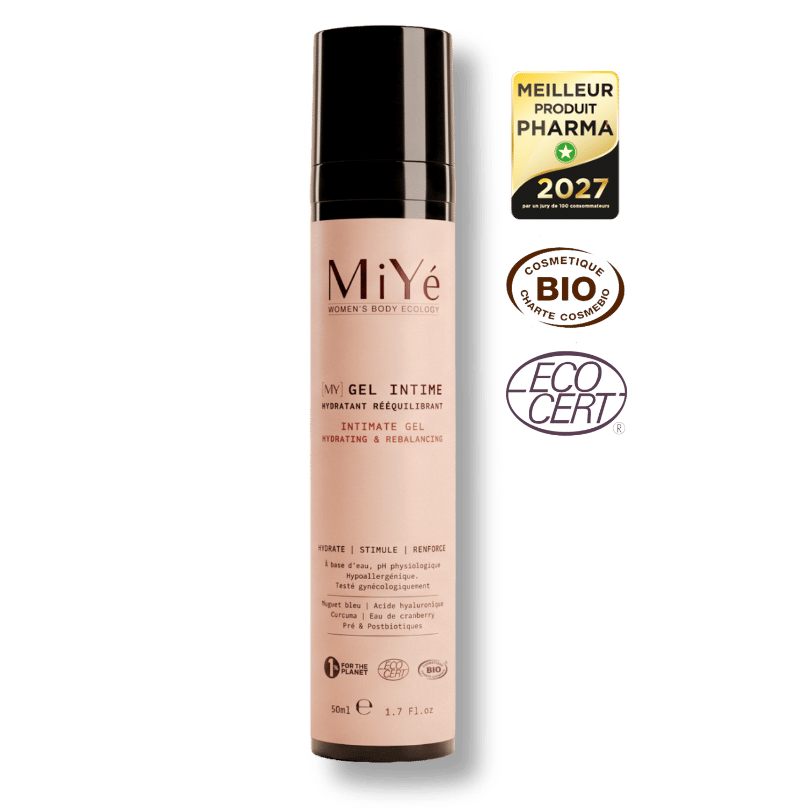
In case of discomfort or intimate dryness, discover the Intimate Moisturizing Balancing Gel to moisturize, soothe and rebalance the intimate area (vulvar or vaginal dryness, discomfort…).
This product is not a substitute for medical advice. If in doubt, consult your healthcare professional.
What advice for taking care of your vaginal microbiome?
To take care of your vaginal flora, as prevention or after an infection, here are a few simple steps:
- Take care of your gut microbiome. As we just saw, the two are closely linked. To do so, eat plenty of fiber (if your gut tolerates it!), probiotic and prebiotic foods (artichokes, asparagus, chicory, lacto-fermented foods, leeks, bananas, onions…). Limit refined sugar and stress. Eat organic. Take the time to chew well, which helps limit constipation.
- Adopt suitable hygiene. Not too much, not too little! A healthy vagina is "self-cleaning". So no product inside, not even plain water. Simply wash the vulva with a gentle, pH-appropriate product, once or twice a day at most.
- Choose your underwear. Preferably in natural fabrics, changed every day and avoided at night. Also avoid staying in a wet swimsuit for too long.
- Adopt protective gestures. Wipe from front to back when using the toilet, with unscented, undyed paper. Urinate after intercourse. Complete hair removal is also best avoided: hair preserves a protective moisture and warmth for the good bacteria.
- Avoid certain enemies. Such as tobacco and, when possible, antibiotics that are not necessary (always on your doctor’s advice).
- Take probiotics and prebiotics, orally or vaginally. Especially from menopause onward to support the intimate flora when estrogen levels drop, and regularly if you are prone to yeast infections and other cases of cystitis. Favor the strains presented in our article on the role of strains and, ideally, formulas that combine these strains with their food, prebiotics, such as Essential Intimate and Intestinal Flora.
- Limit recurrences with the help of plants. Some plants are being studied for preventing recurrent urinary infections. This is the case of cranberry: its compounds could limit the adhesion of certain bacteria of intestinal origin to the bladder wall. A 2023 Cochrane review indicates that cranberry products probably reduce the risk of symptomatic cystitis in women prone to recurrences.

When you suffer from recurrent cystitis or yeast infections, it is good, beyond treatments, to tackle the problem at its source and to restore and maintain intimate balance. It is this balance that will protect us against recurrences. Microbiomes, whichever they are, are still little-known universes. Research is only just beginning. Until they reveal all their secrets, let’s take care of them.
To support your intimate flora from the inside and the outside, the Intimate Comfort Pack combines a supplement for the flora with the intimate moisturizing balancing gel.
FAQ
What is the link between gut flora and intimate flora?
Gut flora and intimate flora are closely linked.
Some bacteria from the gut microbiome can migrate to the intimate area because of their anatomical proximity.
Result:
- a gut imbalance can disrupt the intimate flora
- and promote infections or discomfort
Taking care of your gut microbiome therefore also helps preserve intimate balance.
What are the symptoms of a gut flora imbalance?
An imbalance of the gut microbiome (dysbiosis) can cause:
- bloating
- bowel transit problems (constipation, diarrhea)
- abdominal pain
- fatigue or digestive discomfort
These signs reflect an imbalance between "good" and "bad" bacteria.
What are the symptoms of an imbalanced intimate flora?
A disrupted intimate flora can cause intimate discomfort:
- itching or irritation
- unusual odors
- abnormal vaginal discharge
- burning sensations
These symptoms are linked to a decrease in good bacteria (lactobacilli), which promotes infections.
How can I naturally support my gut and intimate flora?
To support the balance of both flora, it is essential to take a holistic approach:
- favor a diet rich in fiber and probiotics
- reduce stress
- avoid harsh products (intimate or food)
- support the microbiome with suitable probiotics
Probiotics taken orally could help support the balance of gut and vaginal bacteria, although study results vary depending on the strain.
Sources:
- Ravel J. et al. (2011), Vaginal microbiome of reproductive-age women, Proceedings of the National Academy of Sciences (PNAS).
- Amabebe E., Anumba D.O.C. (2020), Female gut and genital tract microbiota-induced crosstalk and differential effects of short-chain fatty acids on immune sequelae, Frontiers in Immunology.
- Muhleisen A.L., Herbst-Kralovetz M.M. (2016), Menopause and the vaginal microbiome, Maturitas.
- Howell A.B. et al. (2010), Dosage effect on uropathogenic Escherichia coli anti-adhesion activity in urine following consumption of cranberry powder standardized for proanthocyanidin content, BMC Infectious Diseases.
- Williams G. et al. (2023), Cranberries for preventing urinary tract infections, Cochrane Database of Systematic Reviews.
- Inserm (2021), Microbiote intestinal (flore intestinale), information dossier (in French).

Share:
Does the contraceptive pill increase the risk of depression?
Does the contraceptive pill increase the risk of depression?