





















Hormonal acne in adult women
It’s not just teenagers who suffer from acne! Over 50% of adult women are prone to hormonal acne, and 70% of those affected by severe acne are over 26!
Acne is a symptom, not a disease; it’s a signal that the body is sending to say that something is wrong. Beyond the physical aspect, it’s a real psychological ordeal for many women. Stress, hormonal problems, the wrong pill… the causes can be multiple and are not always easy to find. While solutions do exist, it may be necessary to explore a number of them before finding the one that suits you best.
What is hormonal acne in adults ?
As its name suggests, hormonal acne is linked to fluctuating hormones. Often associated with teenagers, hormonal acne affects many women in adulthood, since the average age of hormonal acne in adult women is 35.
Various factors related to different periods in a woman’s life can contribute to acne: menstruation, pregnancy and menopause.
But other factors can also cause or contribute to acne, such as taking or stopping hormonal contraception, stress, diet, etc.
There are two possible scenarios:
- Women who have had acne since adolescence, and whose acne does not disappear after the age of 25…
- Women who never had acne in their teens but start to develop it after the age of 25, usually with a sudden onset.
Types of hormonal acne
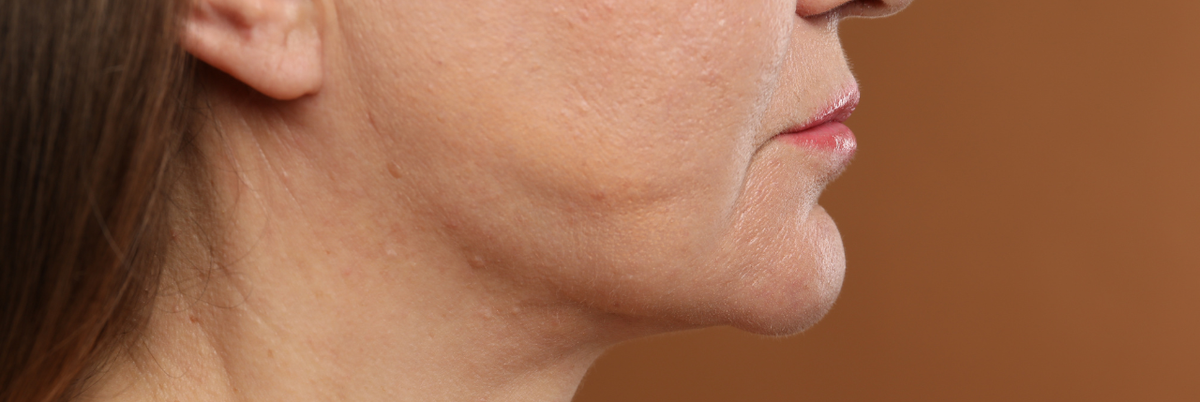
Hormonal acne in adult women differs from teenage acne in that lesions are mainly localized on the chin, jawline, neck and sometimes the back.
Teenage acne, on the other hand, generally spreads over the entire face, with the T-zone particularly marked.
Whatever the type of acne, the mechanism is the same: pores are blocked by excessive sebum production. This leads to the formation of micro-cysts and comedones.
Note that women’s acne is not necessarily synonymous with oily skin (as is the case with teenage acne), since it generally develops on fairly dry, sensitive or even intolerant skin. Hormonal acne is also often associated with scalp discomfort.
Finally, hormonal acne flare-ups in women are closely linked to menstruation, and generally appear every month according to the cycle.
The role of hormones in hormonal acne
From a hormonal point of view, acne in adult women is generally due to either excess androgens (testosterone) or excess estrogens.
Excessive sebum production, due to overactive adrenal glands, is also often present in adult women suffering from acne.
While acne can be linked to a genetic predisposition, it is often related to menstruation and, more specifically, to female hormones such as estrogen and progesterone.
In fact, it’s the upheaval of these same hormones during pregnancy that explains why pregnant women with no history of acne can nevertheless suffer from it.
At menopause, estrogen and progesterone production drops drastically, which can lead to the appearance of a number of unpleasant symptoms, including skin problems. Skin becomes thinner, less elastic, more sensitive, drier and more prone to acne…
Acne can also be caused by the synthetic hormones delivered by contraception… but synthetic hormones can also prevent acne in some women ! When the pill is stopped, the rebound effects can also trigger acne.
It’s up to each woman to decide which contraception is best suited to her body.
Causes of and solutions to hormonal acne in women
Learn to manage stress
A major change in your life, an emotional shock, overwork, chronic stress, everyday worries… there are so many situations that can generate stress.
And as with many hormonal disorders, hormonal acne problems can also be linked to stress.
Being aware of the effects of stress on acne is already a good thing, and even if it’s not always easy, try to take a step back, meditate, practice yoga or sophrology, learn abdominal breathing, indulge yourself… to help you relax.
This will have an effect on your hormones, and therefore on your skin !
Watch your diet
Diet can have an effect on skin inflammation and therefore on hormonal acne.
To support your emunctory organs, such as your liver and intestines, you should opt (especially during acne flare-ups) for an “anti-inflammatory”, balanced, less rich diet. If your liver seems to be giving you trouble (after all, it’s the nerve center of both our hormones and our emotions!), don’t hesitate to consult a visceral physiotherapist, osteopath or acupuncturist, who can help you rebalance it.
If possible, avoid unhealthy fats, refined sugars and excess slow sugars, dairy products and red meat.
Choose a diet rich in cruciferous vegetables (cabbages, radishes, carrots, etc.), and don’t ignore good fats like olive oil.
You can also counterbalance excesses with fiber-rich foods such as fennel or salad, which have the capacity to absorb excess bad nutrients.
Finally, try to eat consciously, without rushing, to avoid digestive worries and stabilize your intestinal microbiota.
Take care of your skin
If you suffer from hormonal acne, consult your dermatologist. He or she will be able to guide you towards a prescription adapted to your acne, as advice and treatments vary according to your type of acne.
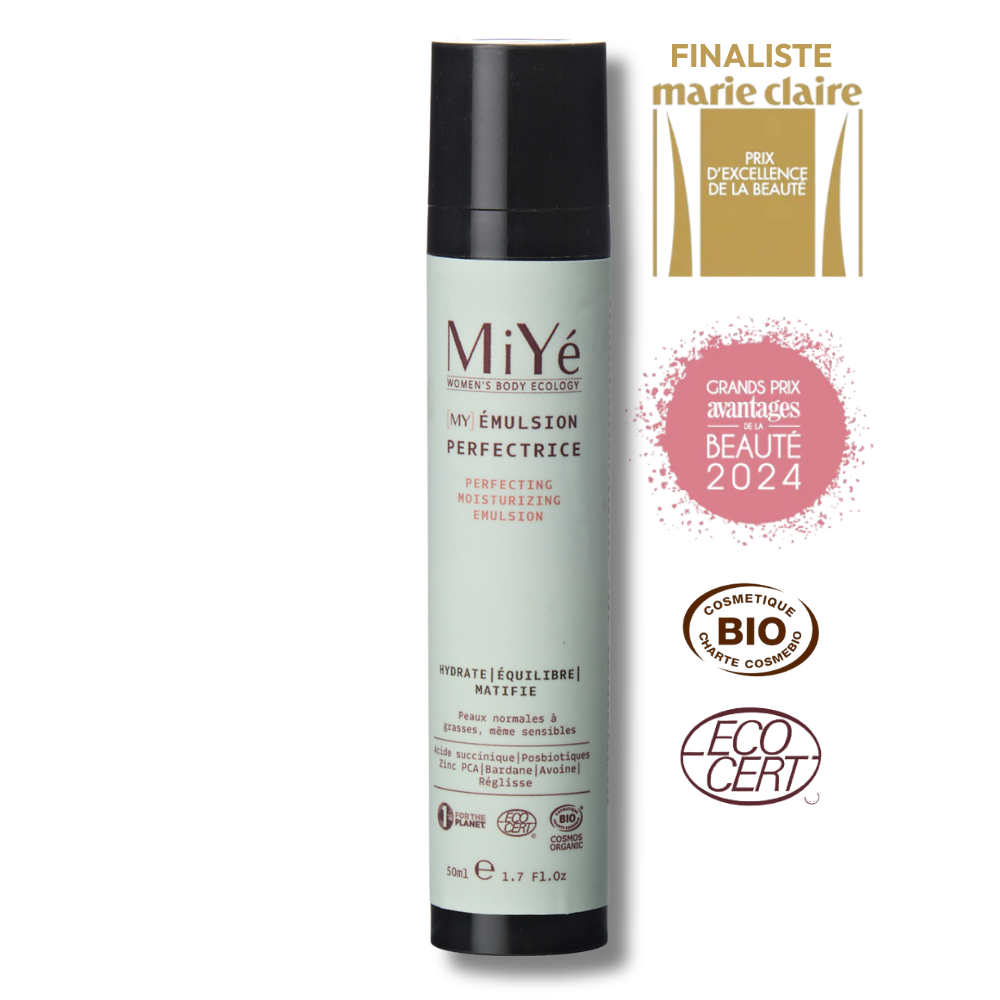
You can also opt for dedicated skin care products, such as
On a daily basis, a few small gestures can help you fight hormonal acne and regain beautiful skin.
Don’t touch your pimples, and above all, never break them!
It’s not easy, we know… but touching them too much will increase inflammation and stimulate sebum production, which will encourage the appearance of new pimples. If you pierce them, you risk indelible scarring.
Use a gentle cleanser every day to free pores of excess sebum. Moisturize your skin with a suitable skincare product. In all cases, use only non-comedogenic products to reduce pore clogging.
To relieve overly inflamed pimples, in addition to prescribed treatments, you can apply Aloe Vera gel for rapid relief.
Hormonal acne in adult women is common, but it’s never easy to live with serenely… for any woman!
Other people’s opinions, self-acceptance, pain (because yes, acne can hurt!) and treatments that are often difficult to tolerate are all elements that add to an already difficult situation.
In our ongoing quest to find solutions to help women cope better with their “hormonal storms”, we shared our Instagram lives with Cécile from prenez votre envol au Naturel and Manon from Putains d’hormones. They agreed to tell us their stories about hormonal acne. Their advice is sure to help you too!

Discover an elixir concentrated in Broccoli DIM titrated to 10% glucoraphanin and plants (HTVE® Patent: High Technology Vegetal Extract) and zinc gluconate to treat hormonal acne, stimulate detoxification and drainage of the body and promote clear, blemish-free skin and a radiant complexion.


Share:
How can I relieve breast pain (mastodynia)?
How to lower blood sugar?