


SUMMARY

Menopause is confirmed after 12 consecutive months without periods, in the absence of contraception.
It occurs on average around age 51, most often between 40 and 55.
Perimenopause, which precedes it, begins on average around age 47 and lasts about 4 years.
Every woman experiences it differently: in women who have frequent hot flashes, they last a median of 7.4 years (SWAN study).
It is not a disease, but a physiological transition. If in doubt, talk to your doctor.
Menopause? Not for me, thank you …
This is the unequivocal finding that emerged from our survey:
Before menopause, in perimenopause (35-45 years old): most women do not feel concerned and above all do not want to define themselves in relation to menopause, or even think about it!
In the midst of premenopause and menopause: in the midst of premenopausal symptoms (from 30/35 years old) and in menopause, most women are sometimes so disrupted in their quality of life that they simply no longer want to hear about it! And the stigma bothers them.
After menopause (12 months without periods): phew, we no longer feel concerned by this “scourge”, all the better…
Menopause therefore has a rather poor reputation!
It must be said that the term is rather poorly chosen: in what way is it a “pause” exactly? And why does it have such negative connotations? All of this is ultimately very cultural; it is nothing more and nothing less than yet another taboo about the female body in our Western culture.
And yet…
I wish every woman to reach menopause, because it is rather a good sign 😊
As a reminder, it is not a disease but rather a natural physiological phenomenon of transition into a new phase of life, highly valued in some cultures: in some tribes, women finally become the equal of men! Not to mention that there are natural solutions for menopause.
And yet it is a social phenomenon that remains too taboo and is passed over in silence.
In France, we estimate that 2.5 million women are in premenopause and 13 million women are menopausal.
Two thirds of them will experience significant physiological and/or emotional effects, and 44% say that this period has negatively affected their quality of life.
What is menopause?
Perimenopause occurs on average around age 47 and lasts about 4 years.
Every woman will experience the symptoms of menopause very differently, and the luckiest will only feel a slight, passing discomfort.
Among the most commonly reported symptoms: hot flashes, mood swings, sleep disturbances, headaches, dizziness, hair loss, lethargy, nervousness, vaginal dryness …
A woman’s psychological and hormonal story generally unfolds in three stages:
- At the beginning, the drop in androgens can have an effect on libido
- Then signs of excitability and irritability linked to an excess of oestrogen (oestrogen dominance relative to progesterone) may appear
- And finally, the fall in oestrogen at menopause can lead to a drop in energy or mood
Fortunately, all the symptoms will eventually fade, the transition phase comes to an end and women settle into a new hormonal balance.
The pace varies greatly from one woman to another.
The period that follows menopause can therefore be a period of great stability, with a return to a different, but very stable, hormonal balance, with lower hormone levels.
Menopause therefore heralds a period of release from hormonal fluctuations and their constraints, provided it is well accepted and the metabolic terrain is good!
What are the misconceptions about menopause?
Misconception No. 1: menopause lasts 1 year
Well, no, precisely.
On average, the symptoms felt during menopause last between 6 months and 7 years, 5 years on average, and sometimes more than 10 years.. and all of this surrounded by a rather astonishing, almost shameful silence..
So, a few definitions to begin with:
- Perimenopause: phase of hormonal decline that has begun, from 30/35 years old on average
- Premenopause : phase of accelerated hormonal decline and stronger perception of the symptoms heralding menopause ( 40-50 years old): 5 to 7 years on average
- Menopause (between 45 and 55 years old, 51 on average): after 12 months without periods.
- Early menopause or POI (Premature Ovarian Insufficiency): when menopause occurs before 40/45 years old, it affects about 10% of women ( 2% of women before 40)
- Late menopause : after 55 or even 60 years old. It can be linked to being overweight in particular (which sustains the secretion of oestrogen)
And 44% of premenopausal women feel a negative impact on their daily lives.(1)

Misconception No. 2: menopause is experienced as a punishment
Again according to the KANTAR study, 59% of women see more advantages than disadvantages in it; however, women who are already menopausal are more numerous than women overall (notably those in premenopause) in saying that menopause has more disadvantages than advantages.(1)
The main advantage, by far, for 55% of women?
“Being freed from the constraints and pain linked to periods.”
Misconception No. 3: menopause is no longer a taboo or a social stigma
On this point, there is apparently still some work to do!
One third of menopausal or premenopausal women have already heard jokes about menopause, and negative remarks.(1)
In this context, one premenopausal woman in 5 says she has already hidden the effects linked to her condition in her private life (1)
And only 1 premenopausal woman in 10 would be willing to tell her manager about her symptoms (1)
34% of women find the subject tiresome and do not want to talk about it (1)
29% find the subject taboo, delicate.
27% find that the symptoms are not easy to identify (1).
Misconception No. 4: there is no link between menopause and health
This is a misconception that can do harm, literally.
While women identify the increased risk of osteoporosis (69%) fairly well, they are not well aware of the rest: only half have heard of cardiovascular risks (yet the leading cause of death among women today!), and fewer than half of cancers and metabolic risks (diabetes, high cholesterol..) (1)
But, good news, the balance of our hormones depends 75% on our lifestyle habits, so we can influence it significantly: read our article on the essential nutrients for hormonal balance.
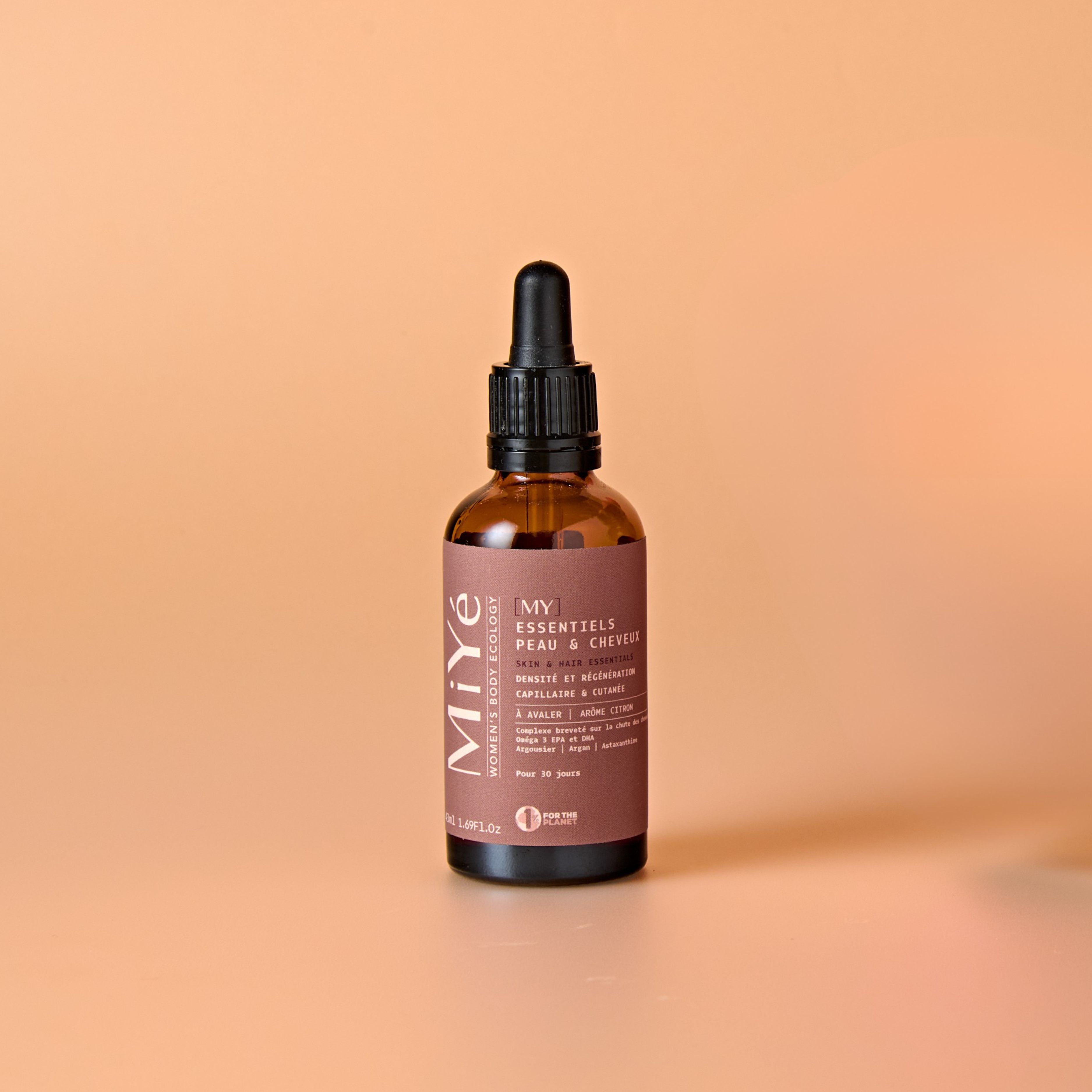
To support the bones, skin and joints, which also change with the drop in oestrogen, discover MY Essentials Bones, Skin & Joints, to be integrated into an overall healthy lifestyle.

Misconception No. 5: the age of menopause cannot be delayed
Actually, it can, by quitting smoking in time!
A study of 90,000 women smokers aged 50 to 79 shows that nearly half of them reached menopause before the age of 50.
Menopause was brought forward by:
- nearly two years in smokers who started before the age of 15;
- one and a half years in those smoking up to 25 cigarettes a day;
- a little over a year in women exposed to passive smoking.
But also.. on a lighter note, several decades of research have established that having intimate relations at least once a week reduced the chances of entering menopause by 28% compared with women who have sex less than once a month ( Published in Royal Society Open Science.)
According to the study, this could be explained by the body’s response to evolutionary pressures.
“If a woman has infrequent sex as she approaches forty, her body will not receive the physical signals of a possible pregnancy”, and the woman’s body will then invest more of its energy in caring for her family rather than in ovulation. ” (2)
Supporting this transition day to day
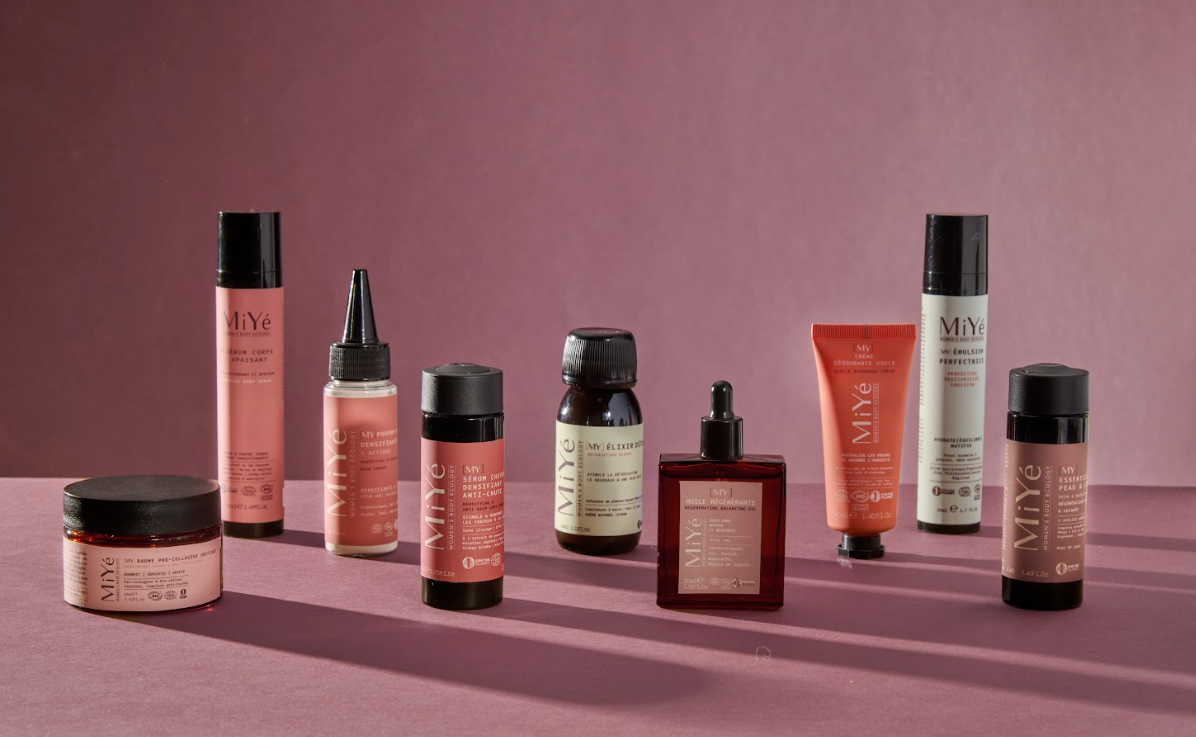
Natural solutions are part of an overall healthy lifestyle: diet, sleep, movement, stress management. To complement these habits, MiYé offers:
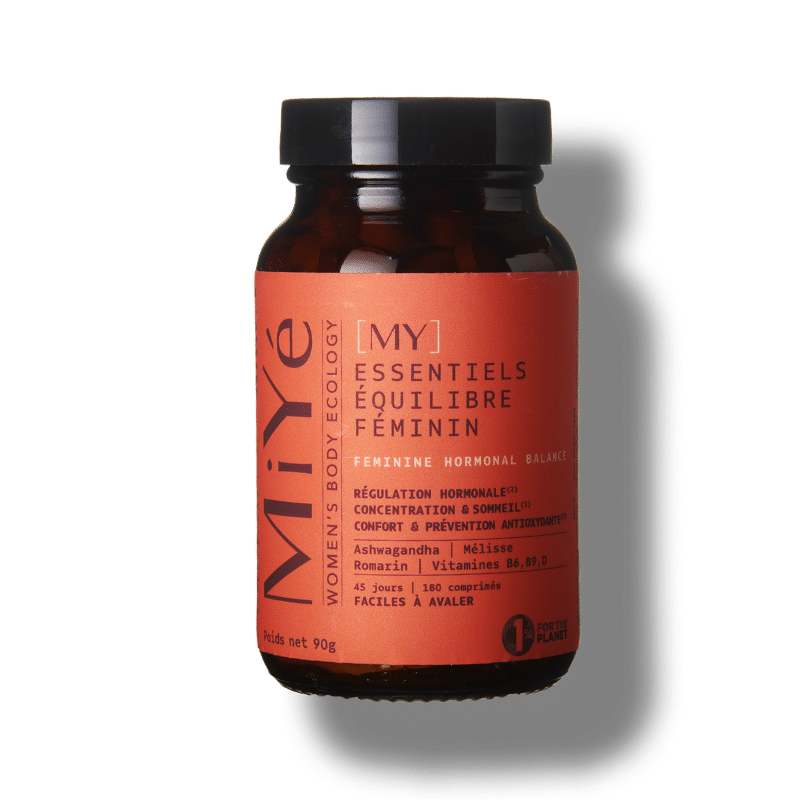
- MY Essentials Women’s Balance, to support the hormonal variations of perimenopause and menopause.
- MY Essentials Bones, Skin & Joints, to support the body’s structure during this period.
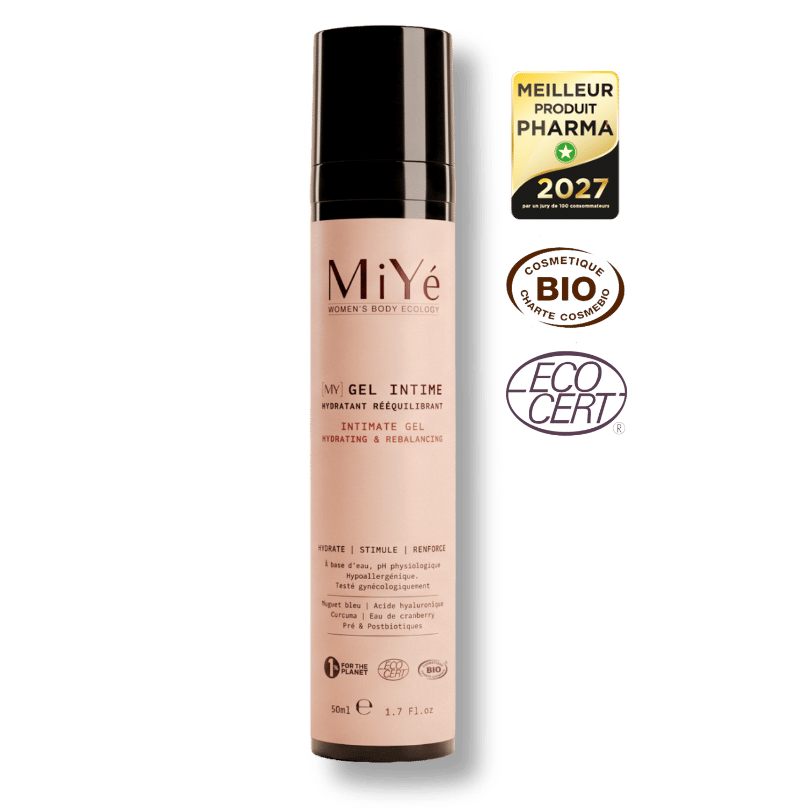
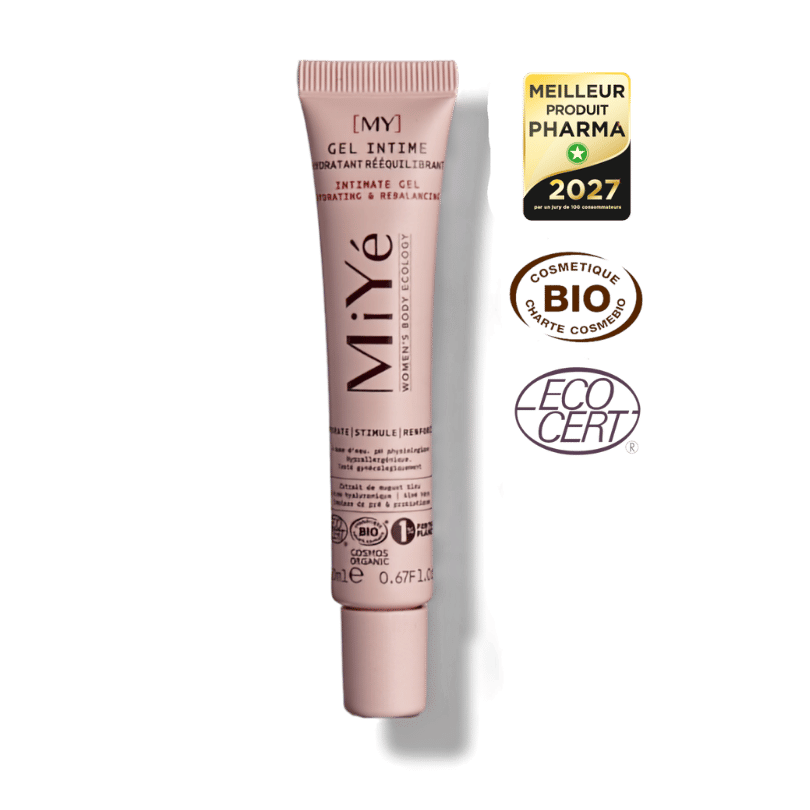
- MY Intimate Moisturizing Balancing Gel, for intimate comfort.
To go further: our full perimenopause and menopause selection.
Food supplements are not a substitute for a varied and balanced diet. We are not doctors and our products have no medical purpose: please seek advice from your doctor.
What is the first sign of menopause?
The most common is irregular cycles.
Periods become less regular, heavier or more spaced out.
Other signs may appear quickly: hot flashes, sleep disturbances, mood swings.
What are the 34 symptoms of menopause?
There is no strict universal list, but people often speak of a wide variety of symptoms (up to 30+).
The most common:
- hot flashes, night sweats
- fatigue, sleep disturbances
- mood swings, anxiety
- weight gain
- vaginal and skin dryness
- hair loss, drier skin
Not all women experience all of them, nor with the same intensity.
What are the three phases of menopause?
There are 3 stages:
-
Premenopause (or perimenopause): irregular cycles, first symptoms
-
Menopause: periods stopped for 12 consecutive months
-
Postmenopause: the period after menopause, when symptoms may persist
It is a gradual transition, not a sudden event.
How do I know if I am in premenopause or menopause?
The main difference:
-
Premenopause: periods still present but irregular
-
Menopause: no periods at all for 12 months
A medical check-up can confirm in case of doubt.
Can I get pregnant during menopause?
Yes, as long as periods have not stopped for 12 months, pregnancy remains possible.
After menopause, fertility naturally ends because the ovaries no longer release eggs.
Sources
- Santé.fr, French public health information service: Menopause and perimenopause (in French).
- Avis NE, Crawford SL, Greendale G, et al. : Duration of menopausal vasomotor symptoms over the menopause transition, JAMA Internal Medicine, 2015;175(4):531-539.
- Hyland A, Piazza K, Hovey KM, et al. : Associations between lifetime tobacco exposure with infertility and age at natural menopause: the Women’s Health Initiative Observational Study, Tobacco Control, 2016;25(6).
- Arnot M, Mace R. : Sexual frequency is associated with age of natural menopause: results from the Study of Women’s Health Across the Nation, Royal Society Open Science, 2020;7(1):191020.
- Kantar for MGEN and the Fondation des Femmes: Survey “Les Français.es et la Ménopause” (French people and menopause), 2020 (in French)

Share:
Hormonal detoxification: what if your liver was the key to your balance?
Should you adapt your diet for premenstrual syndrome ?
7 comments
Bonjour,
Nous vous proposons notre sérum corps de massage pour décongestionner les zones tendues.
Merci !
Bonjour, contre les douleurs musculaires liées à la post ménopause, avez vous quelque chose à proposer? Merci
Bonsoir Tessa,
Dans un 1er temps, il me semble que vous devriez aller consulter votre gynécologue ou un endocrinologue.
Vous pouvez tester notre complément alimentaire “MY Equilibre Féminin” pour la fatigue et les bouffées de chaleur mais il ne pourra pas soulager vos nausées et vos fuites urinaires..c’est vraiment le moment de consulter.
Bonjour j.ai mes règles tous les 15 jours et ça dure un mois et demi que faire? J.ai des bouffées de chaleurs des douleurs des maux de tête des nausées des fuites urinaires de la fatigue et j.en passe. Que le proposer vous?
Bonjour, nous vous conseillons notre complément alimentaire équilibre Féminin et notre brume SOS oxygénante.