






SUMMARY

Hormonal balance depends heavily on diet: vitamins, minerals, fatty acids and antioxidants contribute to the proper functioning of the hormonal system and to the regulation of interactions between hormones.
With age, hormone production gradually declines (from 25–30 years old), which can cause symptoms such as fatigue, sleep disturbances, low libido or weight gain.
Certain nutrients are particularly essential, notably iodine, zinc and selenium, which support thyroid function and hormone production.
Other key nutrients such as iron, vitamin D3 and omega-3s contribute to immunity, bone health and good hormonal communication within the body.
A balanced, nutrient-rich diet can help the body naturally correct certain hormonal imbalances, by supporting metabolism and overall health.
Why does our hormonal balance get disrupted with age?
The well-tuned symphony of our hormones plays a key role throughout our lives, as it intervenes in the proper functioning of the whole body: mood, sleep, sexuality, muscle and bone development, etc.
In Greek, the word “hormone” evokes the idea of excitement and stimulation: hormones are the conductors of our body’s orchestra. And while each hormone has its own particular function, it is essentially the right interactions and synchronisation between them that guarantee our proper functioning. For example, a situation of oestrogen dominance, the stimulating hormone, inevitably induces a relative deficit in progesterone, the soothing hormone, since the two act in synergy.
Did you know? Hormonal decline begins at around 25/30 years old on average. From 30/35 years old, the level of most hormones drops by 2% per year. From 40 years old, the ovaries gradually reduce their production of oestrogen until menopause (as well as a physiological decline in testosterone and progesterone).
Most of the time, the drop in hormone levels is gradual and spread over 10 years. But unlike men, there is always a stop: menopause.
Among the most common signs announcing menopause, and in particular the drop in oestrogen: disturbed sleep, hot flashes, vaginal dryness and atrophy and of the mucous membranes, a drop in libido, accelerated hair loss, more pronounced wrinkles (oestradiol stimulates collagen), but also memory loss and loss of bone density, weight gain, night sweats… sounds dreamy, doesn’t it?
But good news: many natural bioactives have demonstrated great benefits for proper hormonal function!
Which nutrients are essential for proper hormonal function?
Keep in mind that the most important thing, in our view, is to work on your “terrain”, that is, your metabolism, but also your way of life and your mindset. It is the main determinant of your health and your balance in the medium and long term. If you are waiting for a “drug” from traditional allopathic medicine, it is often already a little late and the imbalance has turned into a pathology.
So, no food is able to instantly boost the production of our hormones, with a few exceptions (insulin, serotonin and dopamine in particular). However, adjusting our diet can absolutely help the body to self-correct this emerging imbalance.
Moreover, the absence of certain nutrients can cause hormone production, or their proper use, to drop in the medium term!
The “hormone-friendly” nutrients to favour: the trio of iodine / zinc / selenium, whose intakes may be insufficient in women.
Iodine
Iodine intakes may be insufficient, particularly in women. Iodine contributes to the normal production of thyroid hormones and to the normal function of the thyroid.
Be sure to buy iodised salt and to salt at the end of cooking, because iodine is a very volatile mineral, largely destroyed by cooking (cooked fish contains almost no iodine, unlike shellfish and raw fish). It is mainly found in seaweed (bladderwrack, Breton kombu…), but also in seafood, fish (cod, haddock…) and dairy products.
Zinc and selenium
Selenium contributes to the normal function of the thyroid, and zinc to the maintenance of normal testosterone levels in the blood.
Favour seafood (oysters are particularly rich in zinc), but also nuts and seeds, offal and meat (beef, calf’s liver…), as well as wheat germ.

Iron
According to the SU.VI.MAX study, around 23% of non-menopausal women had depleted iron stores (1). To promote iron absorption, increase your intake of vitamin C and avoid tea or coffee during iron-rich meals.
Also increase your consumption of animal-based iron, the form best absorbed by our body (meat), without forgetting certain iron-rich plants: cumin, thyme, spirulina, sesame, soy…
Be careful about the risk of overdose, though! If you are not sure, opt for a blood test before taking iron supplements.
Vitamin D3
Intakes of vitamin D are often insufficient, especially in winter, when there is less sunshine. Vitamin D contributes to the normal function of the immune system and to the maintenance of normal bones, an important point of attention for women after menopause.
Moderate sun exposure (face and forearms) remains the best way to avoid deficiencies. There is of course the famous cod liver oil of our grandmothers, very rich in vitamin D. The same goes for small oily fish (“small” fish being the least polluted with mercury) such as herring, mackerel and sardines, but also dark chocolate, milk, eggs and button mushrooms, which are significant sources!
To support the bones, particularly from the age of 40, MY Essentials Bones, Skin & Joints combines vitamins D3 and K2, calcium and zinc, to be integrated into an overall healthy lifestyle. Vitamin D contributes to the maintenance of normal bones.
Omega-3 fatty acids
They are essential to the proper functioning of all our hormones!
Alpha-linolenic acid (ALA) is found in plants such as rapeseed oil, flaxseed oil, walnuts, soy and wheat germ (as well as flaxseeds and walnuts). You also need to consume ALA of animal origin, such as “Bleu Blanc Cœur” products (milk, cheese, eggs, meat…) obtained from animals fed with flaxseed, lupin or alfalfa, and therefore enriched in ALA.
Finally, EPA and DHA are mainly concentrated in oily fish such as mackerel and herring, which are less polluted with heavy metals than large fish at the top of the food chain such as salmon.

Magnesium
(My absolute must-have!)
Intakes of magnesium may be insufficient. Several factors may contribute: processed food that is lower in magnesium, but also stress, noise, chronic pollution, intense physical exercise…
Age and sex are also important factors: magnesium deficiency is said to be more common in people over 50, because magnesium absorption often becomes less efficient, and women appear to be more affected than men.
Be sure to eat plenty of pulses, leafy green vegetables, dried nuts and seeds, walnuts, wholegrain cereals, wheat germ and seafood, and also to take supplements if you think you belong to the at-risk categories for deficiency.
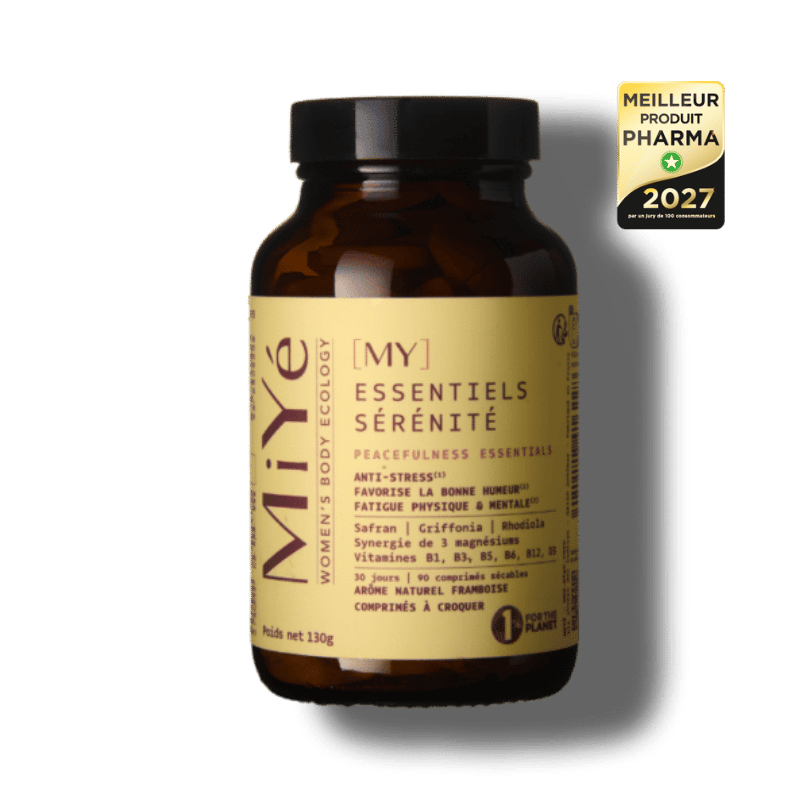
To complement your diet, MY Serenity Essentials combines three forms of magnesium (bisglycinate, malate, citrate) with B vitamins. Magnesium contributes to the normal functioning of the nervous system.
Good news: dark chocolate is said to be a very good ally, even if it should still be eaten in moderation 🙂
3 SIMPLE golden rules for good nutritional balance
Beyond the intake of essential nutrients, it is also key to pay attention to preparation methods and to the synergies between ingredients. If you had to remember only 3 rules, they would be the following 3:
1. Make sure to keep your blood sugar under control
Blood sugar is the measure of the level of sugar in the blood. It can be the cause of many disorders, such as insulin resistance, which paves the way for many inflammations.
To avoid this, limit fast sugars in general (sugary drinks, pastries and sweets, beer…) and especially in the evening. Favour fibre, which can modulate the speed at which carbohydrates are absorbed. Move for at least 20 minutes a day: physical activity allows glucose to be used without needing insulin. And of course, favour low-glycaemic-index ingredients (vegetables, pulses, nuts, fruit, wholefoods richer in fibre), such as al dente pasta or sourdough bread. Green tea and cinnamon are also said to have interesting effects on blood sugar.
2. Pay attention to preparation methods
This is THE subject we tend to forget, but cooking and preparation methods directly influence the proper absorption of nutrients!
Favour gentle cooking methods (steaming, bain-marie…) and “al dente”, which both preserve nutrients and limit the impact on blood sugar. Try to eat fresh products, raw or cooked at low temperature, as often as possible.
Avoid overheating fats and “caramelising” ingredients, as this leads to the formation of toxic substances. Finally, prefer containers made of “healthy” materials (glass, stainless steel, etc.) to plastics, aluminium or other coatings that may release unwanted molecules.
3. Favour diversity!
All nutritionists agree on this point: diversity is the key to good nutritional balance. It is ultimately the simplest rule, one that stimulates our taste buds, our health and our creativity all at once. Try not to eat the same main food more than twice a week, add colour to your plate, use herbs and spices generously, vary oils and fats, and replace your usual ingredients with new, healthier ones.
For example, try replacing the liquid in a recipe with a plant-based or vegetable juice, sugar with dates, and mix different kinds of low-glycaemic-index flours (lentil, chickpea, sweet potato, quinoa…). It works very well.
Women who are particularly “at risk” of hormonal imbalance
If you are already taking treatment for a hormonal condition (thyroid, diabetes…), the dosage of your treatment may not be well balanced: please consult your doctor.
If you are stressed, athletic or going through menopause, it is normal for certain hormones not to work as well. It may then be helpful to review your diet and to be supported with a food supplement and/or herbal medicine to cover all your needs for certain nutrients.
Thanks to Véronique Liesse, dietitian, nutritionist and micronutritionist.
To support hormonal variations (premenstrual syndrome, perimenopause…), which can come with fatigue and brain fog, MiYé has developed MY Women’s Balance Essentials. This formula combines organic plants standardised in active compounds with vitamins B6, B9 and D3, to be integrated into an overall healthy lifestyle: diet, sleep, movement, stress management.
Not sure where to start? Take the MiYé hormonal profile test to better understand your situation.
Food supplements are not a substitute for a varied and balanced diet. We are not doctors and our products have no medical purpose: please seek advice from your doctor.
FAQ
What are the signs of a hormonal imbalance?
The most common symptoms are:
persistent fatigue
menstrual cycle disturbances
mood swings, irritability
acne, hair loss
They can be linked to several hormones (oestrogen, cortisol, insulin…) and affect both the body and emotions.
How can I boost my hormones naturally?
You can’t “boost” every hormone, but you can support their balance:
eat essential nutrients (good fats, protein, fibre)
do regular physical activity
manage stress (cortisol)
get enough sleep
These levers help the hormonal glands to function optimally.
Which vitamin helps regulate hormones?
B vitamins (notably B6, B9, B12) are key:
they take part in hormone synthesis and regulation
they also influence mood and sleep
Magnesium is also important for stabilising hormonal fluctuations and stress.
Which foods help regulate hormones?
The most beneficial are:
oily fish (omega-3)
cruciferous vegetables (broccoli, cabbage)
nuts and seeds (good fats, zinc, fibre)
wholegrain cereals and pulses (fibre)
They help reduce inflammation, support the liver and eliminate excess hormones.
Sources
- Galan P, Yoon HC, Preziosi P, et al.: Determining factors in the iron status of adult women in the SU.VI.MAX study, European Journal of Clinical Nutrition, 1998;52(6):383-388.
- European Commission: Regulation (EU) No 432/2012 establishing a list of permitted health claims made on foods, EUR-Lex (claims on iodine, selenium, zinc, magnesium and vitamin D).
- Fondation pour la Recherche Médicale: Hormones and metabolism (in French).


Share:
How do endocrine disruptors work ?
How do endocrine disruptors work ?